Product Lifecycle Management Tools
A summary of my experience working in the Product Lifecycle Management (PLM) team at Oracle, where I contributed to the development of features that help companies manage the lifecycle of their products.
Introduction
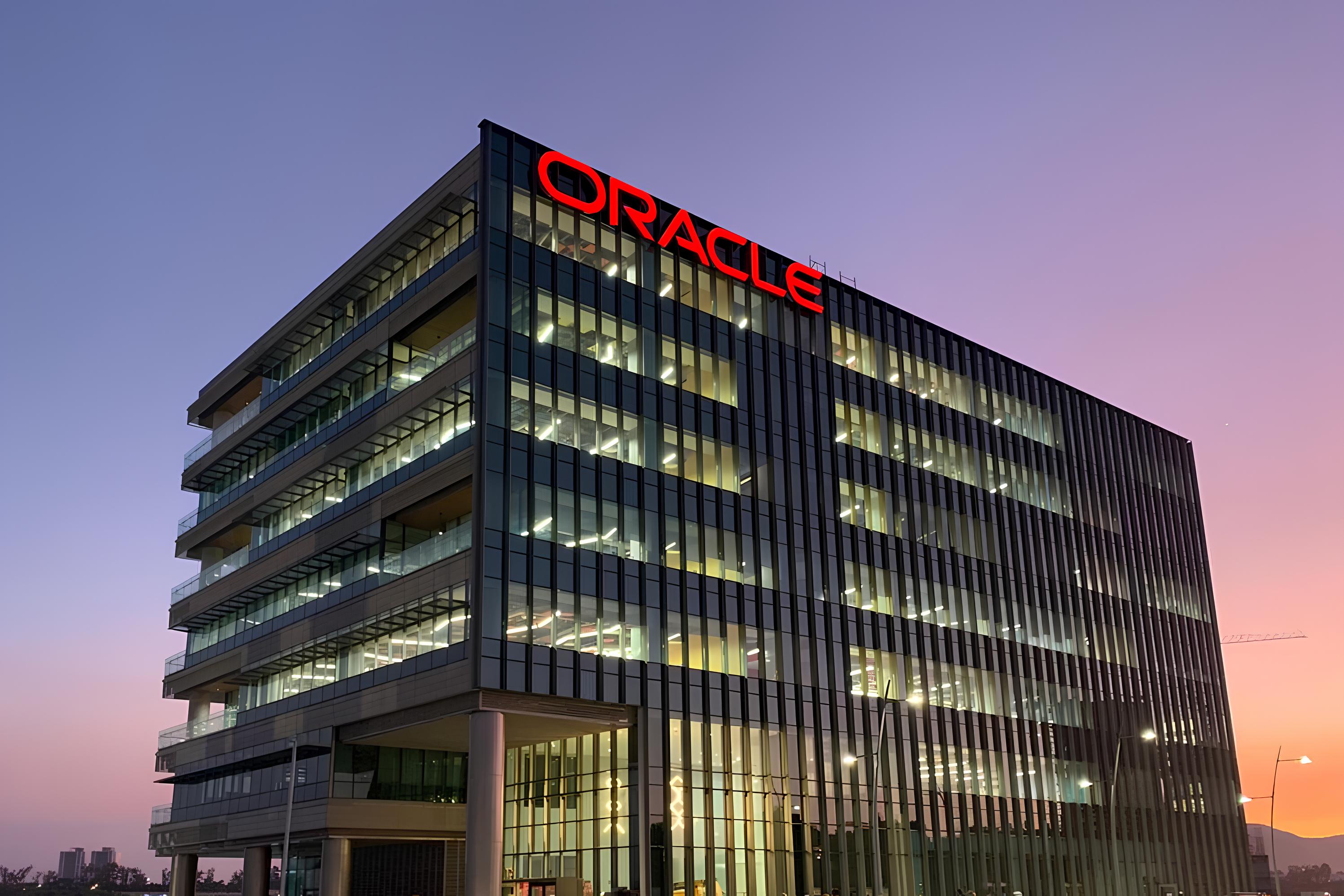
Before returning to Georgia to start my Master's in Artificial Intelligence, I worked on Oracle's Product Lifecycle Management (PLM) team, where I built features using the Oracle Redwood Design System.
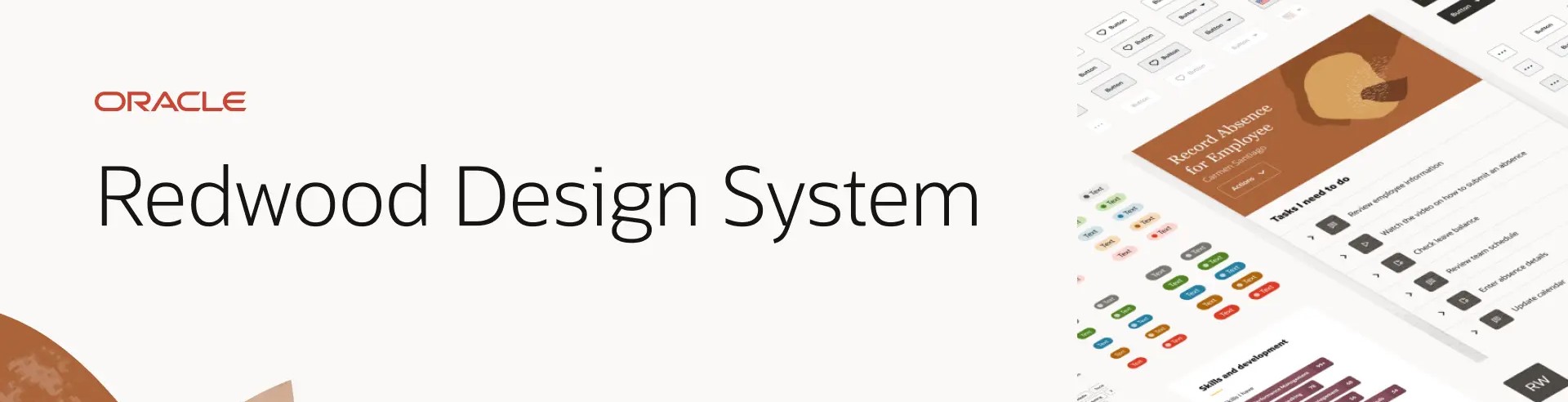
PLM powers key workflows inside Oracle Supply Chain Management (SCM) cloud, from product setup to retirement. In this piece, I break down the real problems we faced, how we solved them, and what that taught me about building enterprise software that people actually rely on.
Context About PLM and SCM
Oracle is a large company with a wide range of products and services. One of its most important offerings is Oracle Supply Chain Management (SCM) Cloud, a suite of tools that helps companies manage their supply chain and product lifecycle. Within the SCM Cloud, there is a team focused on Product Lifecycle Management (PLM), responsible for developing features that help companies manage their products from ideation to retirement.
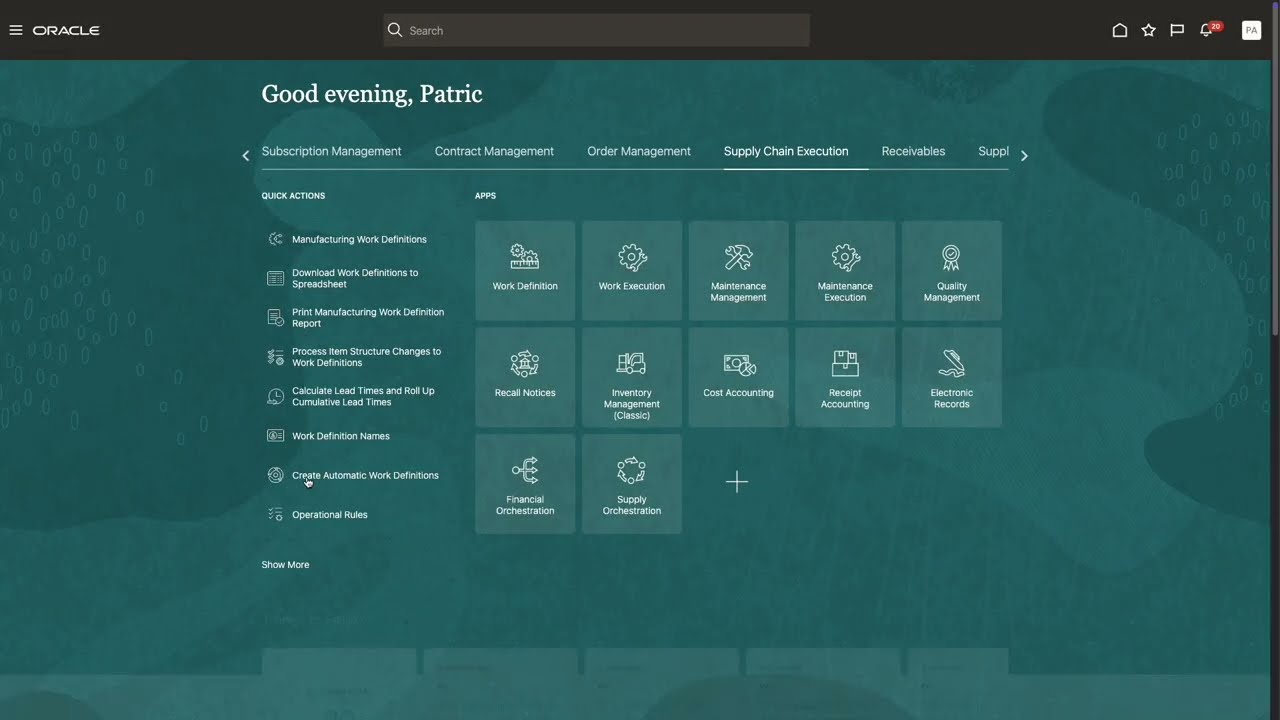
One of the most widely used features in PLM is the ability to create and manage Guided Tasks (also known as Guided Journeys), which are step-by-step workflows used by professionals in manufacturing and supply chain operations to complete their tasks.
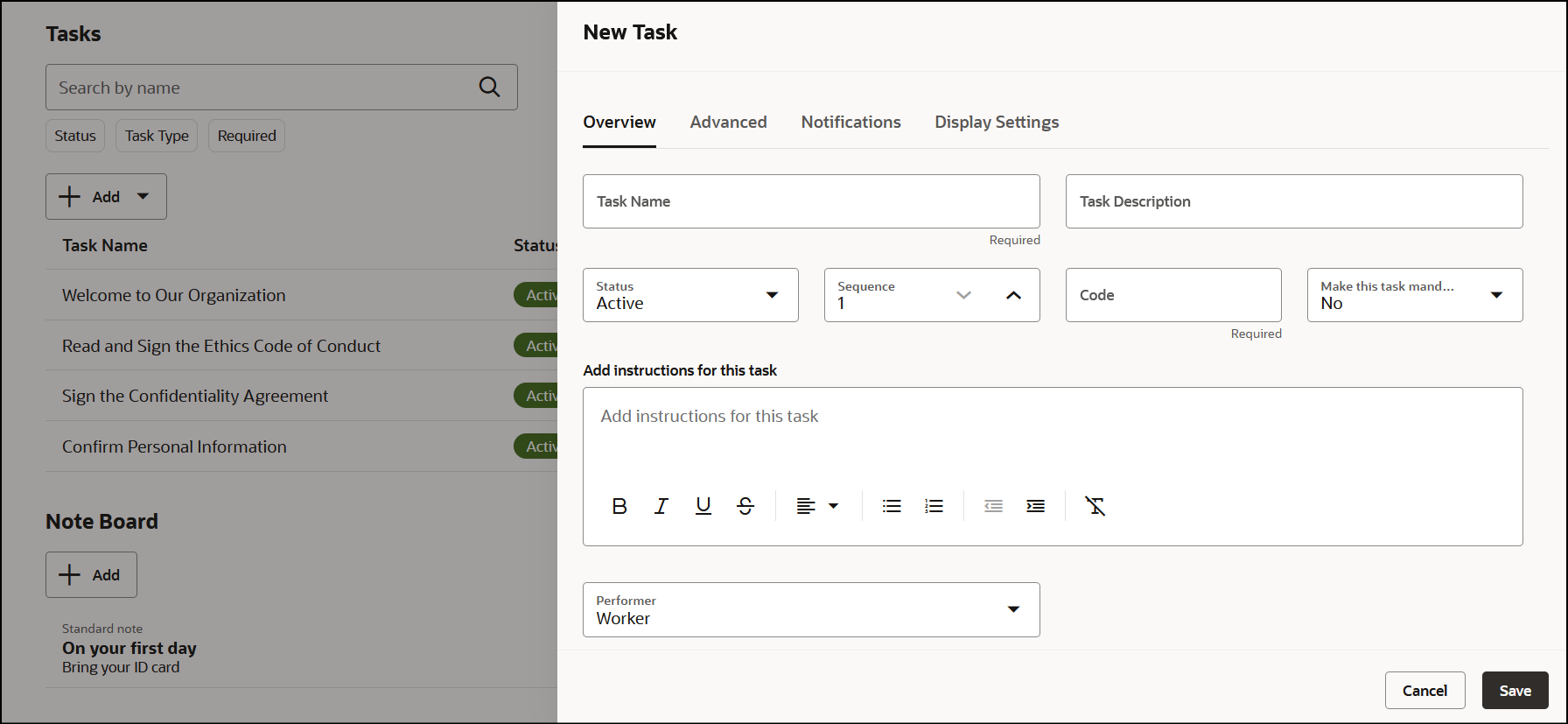
There are dozens of Guided Tasks in PLM. In the image above, you can see an example of a Guided Task that helps onboard a new hire into the company. Each step in the Guided Task has a specific purpose, and users need to complete all steps to finish the task. I worked on several Guided Tasks during my time there. Below, I share details about the Guided Task to which I contributed the most.
Mass Assign Items to Organizations
This Guided Task lets product managers assign product structures and packages to multiple organizations all at once. Without it, you're manually copying the same configuration over and over, which is tedious and prone to mistakes. I built most of the interface components from scratch.
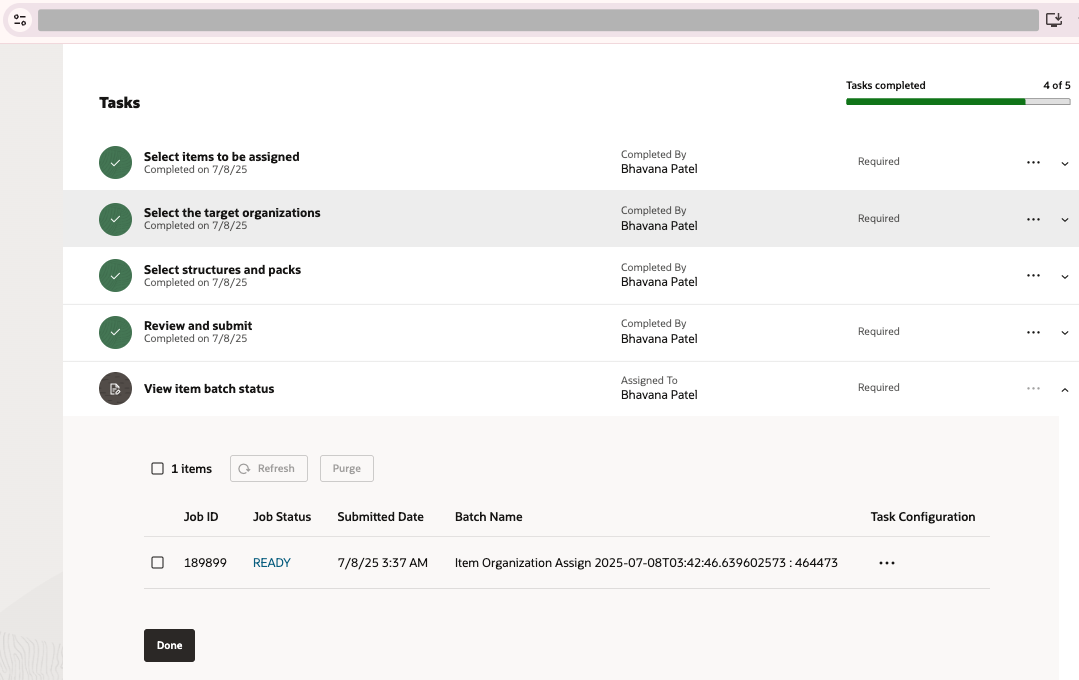
The trickiest part is the Structures and Packs step. You need to search through available product structures and pick the right ones. Get this wrong and products propagate with the wrong configuration, which ripples through the entire supply chain.
I partnered with product managers and designers to nail down what users actually needed, then built the interface to match. On the backend side, I worked with engineers to grab the correct data and ensure data integrity. The whole process taught me how important it is to understand the real-world context of the features you're building and how to collaborate effectively across teams to deliver a polished product.
Natural Language Search Fragment
The Natural Language Search Fragment is an experimental prototype I built in my spare time. Oracle does encourage engineers to pursue ideas, but whether those ideas actually ship depends a lot on your team and who's managing.
The idea is straightforward: let people query a database by talking to it, no SQL knowledge required. The original version we built used a proper Oracle LLM with serious NLP chops. What I'm showing here is a simplified web version that runs completely in-browser, model and all.
The in-browser model isn't as powerful as the original Oracle version, so it's more limited. But it should handle queries like:
- Count all employees
- Select all the employees from Seattle
- Which employees have a name that starts with "A"?
This demo touches on something I've been curious about: running heavy LLMs entirely on the client side. With better model compression and optimization, it's becoming realistic to put powerful language models on users' devices—no cloud needed. That changes the privacy calculus pretty dramatically, and it could make LLMs much faster and more accessible.
Filter Values Fragment
This fragment is a small but crucial part of the user interface that I reworked to improve usability. The original design had a lot of issues: it was slow, clunky, and just generally frustrating to use. I redesigned it to be more intuitive and responsive, which made a big difference for users who rely on it for their daily tasks. The most important change in the component was that I adopted an MVC architecture, which made the codebase much more maintainable and scalable, a feature that was missing in the original version.
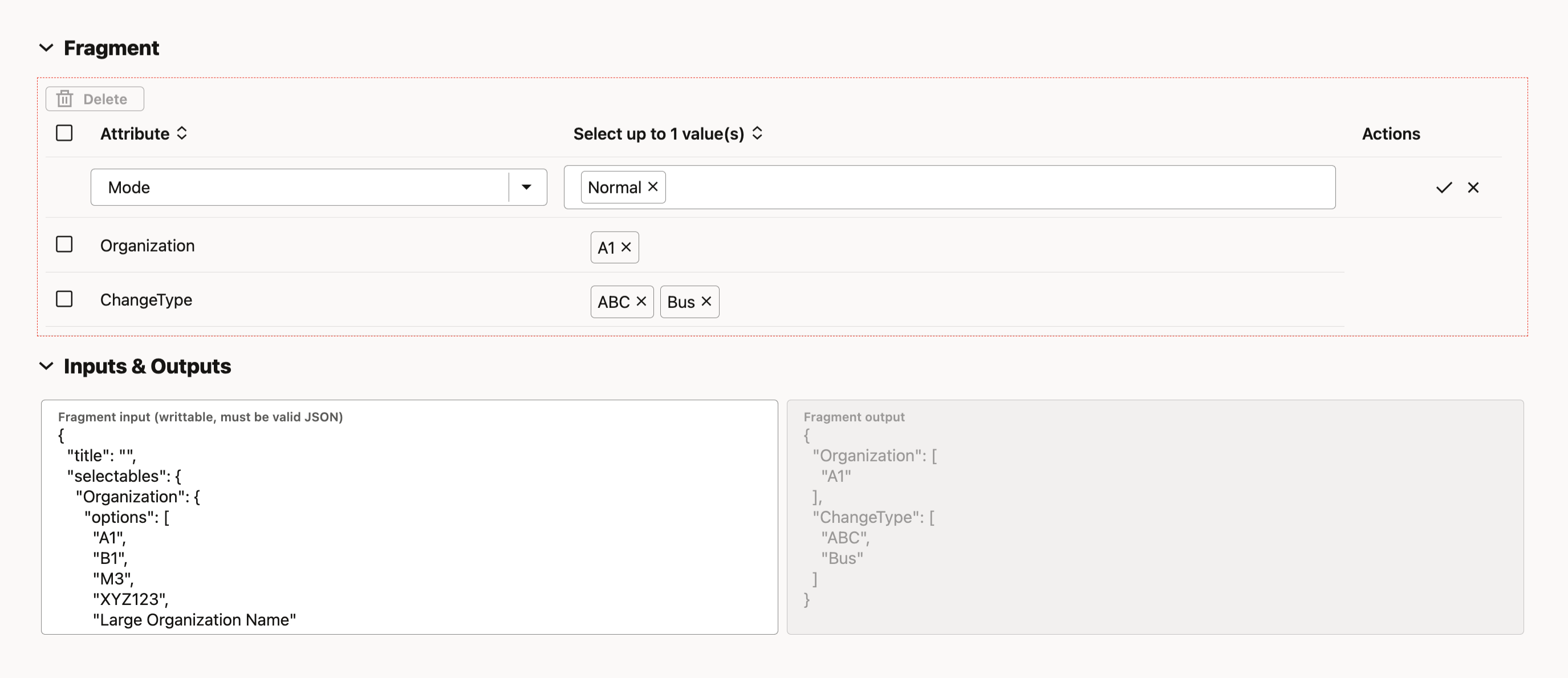
In the image above, you can see MVC workbench I built to create the component. The exportable fragment -what the final user would see- is surrounded by the red box. While everything outside are parameters of the fragment that react real-time to the user's input and change the data that the fragment shows. At the end, only the red box is exported as the final component, but this way to build it made the development process much robust and efficient, akin to an isolated development environment like Storybook, but built in-house and tailored to our specific needs.
Badges & Extras
During my time at Oracle, I earned several badges and certifications across different areas like cloud infrastructure, design systems, and enterprise solutions. These credentials aren't just checkboxes; they represent recognized expertise in specific domains. Some of these badges come with the job and are relatively easy to obtain, but the ones that matter are the ones you have to actually work for. The process usually involves building projects, solving real problems, and sometimes passing rigorous exams that test both depth and breadth of knowledge. I took the time to pursue credentials in areas that aligned with the work I was doing.
The credential I'm most proud of is the Associate Oracle Redwood Application Developer credential. The exam is pretty tough and covers a lot of ground on the Redwood Design System. To prepare, I had to deeply understand Redwood's principles, components, and best practices.
Project Outcome
The features I built are in production now, handling real workflows for Oracle's customers. You can see some of them in the Oracle Fusion Cloud Product Lifecycle Management release notes.